This website is not being updated anymore. Please visit the SINE2020 website to for news on our successor project, or keep up-to-date with the latest news posted on Neutronsources.org .
The NMI3 information portal
NMI3 was a European consortium of 18 partner organisations from 12 countries, including all major facilities in the fields of neutron scattering and muon spectroscopy. Read more
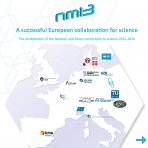
NMI3: A successful European collaboration for science
This interactive brochure illustrates the contribution of the Neutron and Muon consortium to advancing science in 2012-2016. It focuses on the impact of the NMI3 activities on both science and society.
The brochure is interactive because it contains links to videos, press releases, social media, and more. Feel free to click on your favourite topics to know more!
Download it here (PDF ~4.5Mb).
Latest news
Funds for post-grant FP7 publications

You can apply for OpenAire funds to publish or reimburse your FP7 project papers in Open Access journals. read more
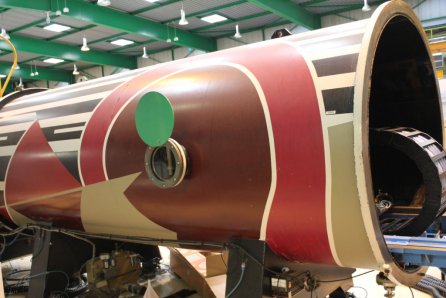
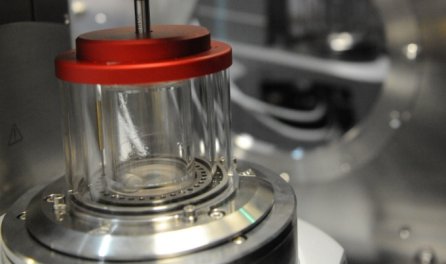
New stopped-flow observation head for simpler and cheaper SANS experiments

A team of scientists and technicians designed a more efficient stopped-flow observation head that can make SANS experiments easier and more efficient to conduct. Watch our new video to know all about it! read more
Mark Johnson to be next ILL UK Associate Director and Head of Science

Mark Johnson, coordinator of NMI3-II, has been appointed new UK Associate Director of the Institut Laue-Langevin, with effect from 1 October 2016. He will act as Head of the Science Division. read more
To learn about NMI3's latest news click here.
